
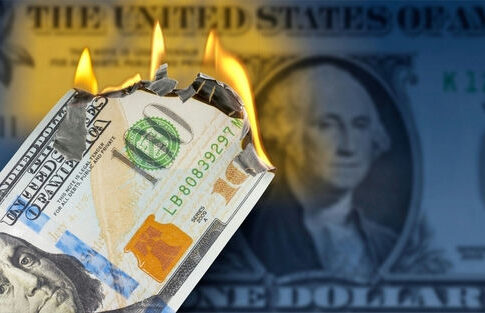
A viral claim that inflation just saw its biggest monthly drop since April 2020 is racing across social media before the official data is even clear, feeding both hope and distrust in a system many Americans already see as rigged.
Story Snapshot
- An anonymous Facebook reel and tweets claim June 2026 prices fell 0.4%, the “biggest drop since April 2020.”
- Official Consumer Price Index (CPI) data showed prices were still rising as of May 2026, with inflation at its highest level in three years.
- The Bureau of Labor Statistics (BLS) has been the only official source for CPI, and its releases show repeated price increases, not big drops.
- This fight over one inflation number highlights a deeper problem: Americans across the political spectrum no longer trust the economic story they are being told.
What the Viral Claim Says About June Inflation
The new buzz started with a short Facebook video and matching posts on X that said June 2026 inflation “posted the biggest one-month drop since April 2020,” claiming the Consumer Price Index fell by 0.4%. The posts also tied this supposed drop to a broader story of relief for markets and ordinary families, suggesting that the worst of price pain is suddenly over. For many Americans worn down by years of rising bills, that message feels like a long-awaited win. But the claim does not point to any official source, named economist, or clear data, which makes it very hard to check.
The reference point used in the posts is April 2020, when core consumer prices really did see a record monthly drop as the Covid lockdown crushed demand for many goods and services. Back then, the Consumer Price Index excluding food and energy fell 0.4%, the largest drop in that measure since records began in the 1950s. Overall CPI also fell, helped by collapsing energy prices. So the benchmark being invoked is real. The problem is that the social media claim treats that historic fall as proof that a similar shock has just happened again, even though today’s economy looks very different and the official June 2026 data picture is still emerging.
What Official Inflation Data Has Shown So Far
The Bureau of Labor Statistics, the federal agency that produces CPI, reported that prices were still climbing into late spring. For May 2026, headline CPI rose around 0.5–0.6% from the previous month, and yearly inflation reached roughly 4.2%, the highest in about three years. Energy costs surged more than 20% over the year, and shelter, transportation, and other core services also pushed higher. Private analysts noted that this was part of a pattern: several strong monthly increases, building momentum rather than showing a sudden drop. In simple terms, the official story through May was “inflation is still a problem,” not “inflation is suddenly gone.”
Release schedules make the timing important. The Consumer Price Index news release calendar shows that the June 2026 report is set for mid-July at 8:30 a.m. Eastern time. Until that report is fully published and reviewed, any precise claim about a 0.4% monthly drop is not grounded in the standard federal data. Forecasts from economic research outfits and prediction markets ahead of the release pointed to year-over-year inflation still well above 3.5%, with roughly 3.8–3.9% expected. Those are not deflation numbers. They describe prices that are rising more slowly, but still rising. That gap between hard data and viral headlines is where confusion grows.
Why This Fight Over One Number Matters So Much
This clash is not only about math; it is about trust. Many conservatives over 40 have watched years of high energy costs, debt-fueled federal spending, and global supply shocks and feel the government has mismanaged the economy. Many liberals over 40 see growing inequality, weaker social supports, and what they view as unfair treatment of workers and minorities. On both sides, a simple belief has taken root: the “elites” in Washington and on Wall Street are not being straight with regular people about the state of the economy. When an anonymous video suddenly says “inflation is crashing,” it taps into both hope and anger at the same time.
BREAKING: Inflation posting the biggest one-month drop since April 2020.
New June CPI data shows prices fell 0.4% from the previous month — the biggest monthly decline since April 2020 — bringing the annual inflation rate to 3.5% as price pressures continue to ease. pic.twitter.com/F0IQZ7gFRm
— Mark knoller (@Gmz2t) July 14, 2026
Research on social media shows that posts with big, emotional claims spread far faster than careful charts or dull government releases. Studies have found that a notable share of users regularly share exaggerated or false economic news, often driven by ideology or by the quest for likes and attention rather than by facts. Fact-checkers have already caught many inflation claims that used real Bureau of Labor Statistics numbers but arranged or framed them to mislead people about trends. In this environment, both politicians and their critics are tempted to cherry-pick any number that fits their story, whether it is “America First is saving your wallet” or “this administration has lost control.”
What Ordinary Americans Should Watch For Next
For families trying to pay rent, buy food, or cover gas, the key question is simple: are prices still going up faster than paychecks? Official CPI reports, while imperfect, remain the main way to answer that question, and they can be checked month after month. When a new report says inflation eased, it is worth asking “by how much, and in which categories?” A small monthly dip driven only by cheaper gasoline does not fix high shelter costs or medical bills. On the other hand, if core prices like housing, food at home, and services actually cool for several months, that can signal real relief.
In a time when many believe the federal government serves insiders more than citizens, it is understandable to doubt official numbers. But turning instead to anonymous reels and tweets can leave people even more vulnerable to spin. A healthy skepticism cuts both ways: question Washington, and also question viral content that claims a sudden, almost too-good-to-be-true victory. Following the full Consumer Price Index releases, looking at year-over-year trends, and asking how those trends match your own grocery and rent realities is not exciting. Yet it is one way regular Americans can reclaim a bit of control from both the deep state and the online outrage machine.
Sources:
facebook.com, bls.gov, summitplate.com, americanprogress.org, pnc.com, cnbc.com, octagonai.co, usinflationcalculator.com, calendarx.com, robinhood.com, fake-off.eu, apnews.com, rstreet.org, insights.som.yale.edu, politifact.com
“Don’t believe your lying eyes!”
Let us know when the measure of inflation includes those things most impacting the lower and middle-class family units.
Basic foods
Gasoline & diesel
Housing
Utilities
Dining out
TV watching subscriptions (cable, satellite)
Internet access
Cell phone service provider cost