
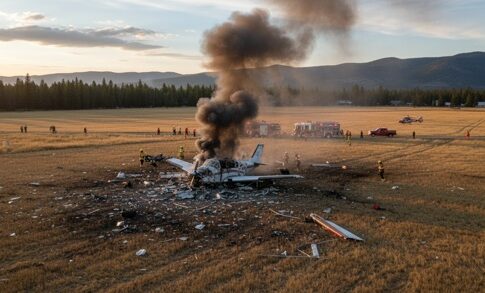
West Papua separatists shot and killed an American pilot, then burned his plane — and called it a message to both the Indonesian and U.S. governments.
Story Snapshot
- American pilot Nicholas F. Gosselin was shot dead in Papua, Indonesia, by the West Papua National Liberation Army, known as the TPNPB.
- The rebels burned the civilian aircraft operated by Indonesian airline PT AMA and released a video claiming full responsibility for the attack.
- The TPNPB claimed the plane was carrying Indonesian troops — a claim the Indonesian military flatly denied and that no news organization has independently verified.
- Seven passengers survived the attack; the Indonesian military recovered Gosselin’s body using a special military operation. The U.S. Embassy in Jakarta did not respond to media requests for comment.
An American Pilot Killed on a Remote Airstrip
Captain Nicholas F. Gosselin landed a small civilian aircraft at Balinggama village in Papua, Indonesia’s remote eastern region. Armed fighters from the TPNPB — the West Papua National Liberation Army — opened fire and killed him. They then set the plane ablaze. The group posted a video online in which a commander stated, “Today, on Thursday, July 2nd, 2026, my soldiers and I shot down and burned a plane and shot the pilot.” Reuters said it could not independently verify the video’s location or date.
Seven passengers were on board when the attack happened. The Indonesian military said all seven were indigenous Papuan civilians, including three women, and that all survived without injury. Local residents helped rescue them before the military launched what it called a special rapid recovery operation to retrieve Gosselin’s body. Photos verified by ABC News showed the burned-out plane on the airstrip and Gosselin’s body at the scene.
Rebels Claim the Plane Carried Troops — But No Proof Has Emerged
TPNPB spokesman Sebby Sambom said the group targeted the aircraft because it had been “repeatedly transporting Indonesian military personnel” into areas the rebels control. He said Gosselin was killed because the plane kept flying despite the group’s warnings to stop all civilian flights in those zones. The rebels also warned that police and military must not enter the Sugapa and Nduga districts to recover the body.
Indonesia’s military directly denied the troop transport claim. A military spokesperson stated that every passenger on board was an indigenous Papuan civilian. No flight logs, passenger lists, or cargo records have been made public by either side. No news organization — including ABC News, NBC News, Reuters, or the Associated Press — has been able to independently verify the rebels’ claim that troops were on board. The TPNPB’s own video showed the burned plane and the pilot’s body, but contained no footage of passengers or cargo.
A Decades-Long Conflict With No Easy Answers
This attack did not happen in a vacuum. Papua has been at the center of a long-running independence movement. The TPNPB and its political wing, the Free Papua Movement, have fought Indonesian rule for decades. Indonesia labels the TPNPB a terrorist organization. Human rights groups report the conflict has displaced roughly 122,000 indigenous people since 2022. Separatists have repeatedly claimed civilian aircraft ferry Indonesian troops — a pattern seen in at least a dozen similar incidents since 2018 — but independent verification has rarely, if ever, been achieved.
Another very concerning freakish separatist Guerrilla group in Papua who picked and shot a US pilot after touch down. We must counter such murderous terrorists. The West Papua National Liberation Army (TPNPB) say they killed Nicholas F Gosselin, a pilot for Indonesian aviation…
— Johanna Kaschke (@KaschkeJohanna) July 6, 2026
The rebels framed this attack as a direct message to Washington, calling it a warning to both the Indonesian and U.S. governments. The U.S. Embassy in Jakarta did not respond to requests for comment as of the latest reports. That silence leaves many questions unanswered — including why an American pilot was working in one of the world’s most active conflict zones, and whether the U.S. government has any plan to respond. For Americans watching from home, the death of one of their own in a remote jungle war most people have never heard of is a stark reminder that instability abroad can reach across the world and hit close to home.
Sources:
humanevents.com, abc.net.au, facebook.com, youtube.com, thehill.com