
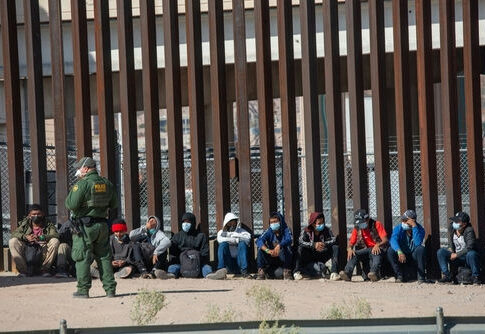
A new stretch of border wall is going up along a known smuggling corridor near Tijuana, yet no one can prove whether it is stopping child traffickers or simply pushing them somewhere else.
Story Snapshot
- New wall segments are being built near San Diego and Tijuana in areas long used for smuggling and cartel activity.[2][6]
- Homeland Security data and Border Patrol videos say barriers can cut illegal crossings and smuggling in some spots.[2][3]
- Human-rights and anti-trafficking groups say a wall does little to stop child trafficking and can even put victims at more risk.[3]
- Environmental groups warn the same projects are slicing through wildlife corridors and sacred lands, raising fresh distrust of Washington’s motives.[1][6]
New Wall Construction in a Longtime Smuggling Corridor
U.S. Customs and Border Protection reported plans to close remaining gaps in California’s border barriers in recent years, including near San Ysidro, Otay Mesa, Jacumba, and Smuggler’s Gulch, all in the San Diego sector.[6] Construction restarted near the San Ysidro Port of Entry using earlier federal funds and special waivers from the Department of Homeland Security to speed work.[2] Those waivers let the agency skip some normal environmental and public review rules, which has fueled suspicion on both sides of the aisle about what is happening in the dark.[1]
Border Patrol videos and agency statements describe these new walls as critical tools to control a corridor that has long seen heavy illegal crossings and smuggling.[2][6] A Homeland Security summary cited in public sources says new barriers cut illegal entries and manpower costs in at least one test area, backing the argument that walls can help in specific locations.[3] Advocates for tougher enforcement say these San Diego segments sit next to Tijuana neighborhoods where cartels move people, drugs, and sometimes children, so blocking easy access is a basic step toward safety.[4]
Does the Wall Actually Stop Child Trafficking?
Supporters often claim that “they trafficked children, they trafficked women, and they trafficked men” through this corridor, and that the wall is shutting that route down. But the public record does not yet show clear before-and-after numbers on child trafficking, kidnapping, or extortion tied to this exact stretch of wall.[4] Border reports and videos do show decreases in illegal traffic in some fenced areas, yet they almost never break out how many of those people were trafficking victims versus adults trying to cross for work or family.[2][4]
BORDER WALL NEAR CHILD TRAFFICKING HOT SPOT
"They trafficked children, they trafficked women, and they trafficked men." A once-open gap near the California-Mexico border that @OscarRamirezTJ says was exploited by cartels and human traffickers has now been closed with new border… pic.twitter.com/gjrpk7Xlb0
— Real America's Voice (RAV) (@RealAmVoice) June 12, 2026
Anti-trafficking experts warn that a simple wall cannot fix a complex crime business built on fraud, forged papers, and abuse inside the United States.[3] A legal group that represents trafficking survivors notes that many women and children at the southern border are fleeing sexual violence and trafficking already, and are trying to seek asylum.[3] When a wall blocks them from asking for protection, they may end up stuck with smugglers or corrupt officials, which makes them easier to exploit, not safer.[3] Advocates say serious anti-trafficking work means more visas, more investigations, and more shelter beds, not only more steel and concrete.
Cartel Adaptation: Tunnels and Route Shifts
Research on earlier border fences shows a pattern that should worry anyone who thinks a wall alone will “solve” trafficking. One study of Arizona fencing found that barriers changed where people crossed but did not end the flow; instead, migrants walked through more remote deserts and their chance of death went up.[4] A historical review of walls in the Tijuana–San Diego area describes how enforcement pushed crossers out of downtown gaps and into distant canyons and mountains, again shifting the risk rather than ending it.
Cross-border tunnels near Otay Mesa and elsewhere in San Diego sector show the same kind of criminal adaptation in this corridor.[4] Federal and state agents in the region have uncovered several underground passages with lights and ventilation systems, built by traffickers who needed a way around surface barriers.[4] These tunnels have mainly been used for drugs, but the same networks can move people if there is profit in it. That reality makes it hard to claim that any single wall segment “closed” a trafficking route for good.
Environmental Damage and Deepening Distrust
While Washington argues about security, people who live near the wall see other costs that deepen their belief that elites are not listening. Environmental groups report that California wall projects are cutting through the “Sky Islands” region and other fragile lands, severing key wildlife corridors and harming border communities.[1] Defenders of Wildlife says border barriers and their roads, lights, and noise could affect dozens of endangered species and more than one hundred migratory bird species, fragmenting habitat that took centuries to form.
BORDER WALL NEAR CHILD TRAFFICKING HOT SPOT
"They trafficked children, they trafficked women, and they trafficked men." A once-open gap near the California-Mexico border that @OscarRamirezTJ says was exploited by cartels and human traffickers has now been closed with new border… pic.twitter.com/gjrpk7Xlb0
— Real America's Voice (RAV) (@RealAmVoice) June 12, 2026
Indigenous leaders in the Southwest have also warned that wall construction is damaging sacred sites and burial grounds, while federal agencies rush projects forward under emergency waivers.[1] For many Americans, both conservative and liberal, this looks like the same old pattern: powerful agencies bulldozing land, skipping public input, and then telling the public to “trust us” on security. When the government will not release clear data on trafficking, arrests, and route changes, it feeds a shared fear that the border wall is as much about politics and contracts as it is about protecting children.
Sources:
[1] YouTube – BORDER WALL NEAR CHILD TRAFFICKING HOT SPOT
[2] Web – U.S.-Mexico Border Wall – Sky Island Alliance
[3] Web – Border Wall Construction Restarts in California and Texas – ENR
[4] Web – Mexico–United States border wall – Wikipedia
[6] YouTube – Border wall construction resumes
Environmental groups. Yeh, we surely should listen to them!