
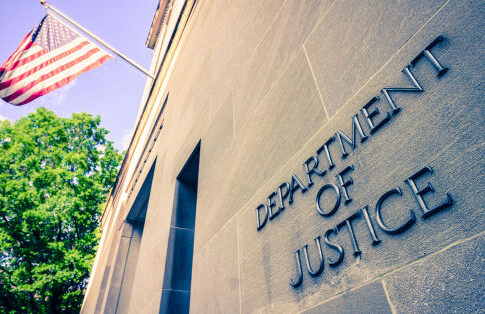
A federal legal opinion now says a core civil rights theory used against employers may be unconstitutional, and that claim could reshape how Washington enforces Title VII.
Quick Take
- The Office of Legal Counsel says Equal Employment Opportunity Commission Title VII guidelines are unconstitutional because they rely on effects, not intent.[1]
- The opinion argues that disparate-impact rules push employers toward race-based decisionmaking.[1][3]
- Supporters of disparate impact say the doctrine is still backed by Supreme Court precedent and Congress.[2][3][7]
- The fight does not end federal civil rights law, but it may narrow agency enforcement and spark more court battles.[2][5][6]
Why the Opinion Matters
The Department of Justice Office of Legal Counsel says the Equal Employment Opportunity Commission’s Title VII guidelines are unconstitutional because they impose liability for statistical outcomes alone.[1] The memo’s core claim is simple: if an employer did not mean to discriminate, the government should not treat a neutral policy as a constitutional violation just because results differ by race or sex.[1]
That position lands in the middle of a long legal fight over disparate impact, a theory that looks at outcomes instead of intent.[4][5] Under that theory, a company can face liability even when its policy is facially neutral, if the policy harms protected groups at a higher rate.[4][6] Critics on the right say that framework pressures employers to sort people by race to avoid lawsuits.[3][4]
What the Memo Says
The Office of Legal Counsel memo argues that the Equal Employment Opportunity Commission’s guidelines violate equal-protection limits because they rest on disparate effects alone.[1] It also says those rules push employers toward race-based choices, which the memo treats as a constitutional problem rather than a fix for discrimination.[1] That framing echoes the Trump administration’s broader push to move federal agencies away from disparate-impact enforcement.[5][6]
That message has immediate practical weight for federal agencies, even if it does not rewrite the law by itself.[2][5] Legal commentators note that executive action can change enforcement priorities, but it cannot erase Title VII’s text or Supreme Court precedent on its own.[2][5][7] In plain terms, the memo may affect what Washington does next, but it does not settle the issue in court.
Why Critics Say the Doctrine Still Stands
Supporters of disparate impact say the doctrine has deep roots in federal law.[2][3] They point to Griggs v. Duke Power Co., where the Supreme Court recognized disparate-impact claims under Title VII, and to the Civil Rights Act of 1991, which commentators say codified that framework.[2][3] From that view, the doctrine is not an invention of agencies, but part of settled civil rights law.[2][3][7]
Those same sources also say private plaintiffs can still bring disparate-impact claims under Title VII, even if federal agencies pull back.[3][5][6] That means employers may face less pressure from Washington, but they are not necessarily safe from lawsuits in court.[3][5] For conservatives who want clear rules and less bureaucratic overreach, that split is important because it shows how much power still sits with judges and not just agencies.
What Happens Next for Employers
The main near-term effect is likely to be a shift in federal enforcement, not an instant legal reset.[5][6] Agencies may deprioritize or narrow disparate-impact work, while private litigation keeps the doctrine alive in many cases.[3][5][7] Employers will still need to track federal guidance, court decisions, and state-law claims, because the legal landscape is likely to stay messy for some time.[5][6]
Today, in response to @EEOC's request to @TheJusticeDept's Office of Legal Counsel for an opinion, DOJ OLC opined on the constitutionality of EEOC's existing interpretations and applications of Title VII's disparate impact provisions. You can read the opinion in the link below.…
— EEOC Chair Andrea Lucas (@andrealucasEEOC) June 9, 2026
For readers frustrated by years of woke compliance rules and federal micromanagement, this dispute reflects a bigger fight over whether Washington should police outcomes instead of intent.[1][4][5] The OLC memo backs a colorblind reading of the law, while its critics say that approach could weaken tools used to challenge hidden bias.[3][7] The real test will come in court, where Title VII’s text, past precedent, and executive policy may collide.
Sources:
[1] Web – Office of Legal Counsel Concludes That Disparate Impact Liability …
[2] Web – [PDF] Constitutionality of Disparate-Impact Liability Under Title VII
[3] Web – DOJ Eliminates Disparate-Impact Liability Under Title VI. What’s Next?
[4] Web – Executive Order Rejects Disparate Impact Theory of Unlawful …
[5] Web – [PDF] Title VI Legal Manual- Disparate Impact – PRRAC
[6] Web – The Truth About Disparate Impact and Equity
[7] Web – Justice Department Erases Disparate Impact Liability From Title VI …
YOU mean the Ferrel monkeys are not equal to us white after all?