
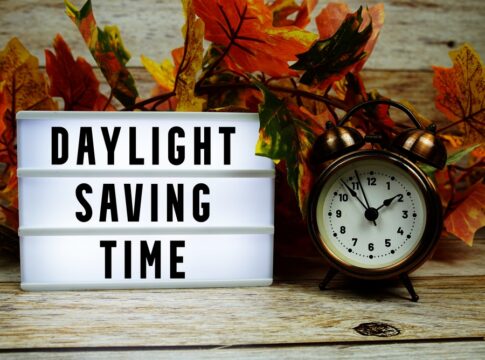
The House has passed a bill to make daylight saving time permanent, putting the long-running clock fight back in the Senate’s hands.
Quick Take
- House lawmakers approved H.R. 139, the Sunshine Protection Act, in a recorded vote on July 14, 2026.
- The bill would end the twice-yearly switch between standard time and daylight saving time.
- Representative Vern Buchanan introduced the measure on January 3, 2025, and listed it with bipartisan cosponsors.
- The issue has resurfaced for years, but past efforts have stalled before becoming law.
House Vote Sends the Bill Forward
The House of Representatives voted Tuesday to pass the Sunshine Protection Act, also known as H.R. 139, by a record vote of 215-211 on the rule that allowed floor action. The bill now moves to the Senate, where lawmakers will decide whether to send it to President Trump’s desk. Supporters say the measure would make daylight saving time the national standard and end the semiannual clock changes that many Americans still find confusing and disruptive.
The bill’s backers have framed it as a simple fix to a familiar problem. Representative Vern Buchanan, a Florida Republican, introduced H.R. 139 on January 3, 2025, and Congress.gov lists 34 bipartisan cosponsors. Buchanan also said the measure was his Sunshine Protection Act and described it as a bill to make daylight saving time permanent year-round. The House vote shows the idea has enough support to survive one chamber, but not yet enough to finish the job.
A Familiar Debate Returns
This is not the first time Congress has tried to lock the clock. The Sunshine Protection Act has surfaced in several recent sessions, and earlier versions won attention but not final approval. In March 2022, the Senate passed a similar version by unanimous consent, but the effort expired without House action. That history matters because it shows the main obstacle has never been public awareness. It has been turning a popular idea into a law that both chambers can accept.
The renewed push also reflects a basic split that has dogged the issue for years. Many people want to stop changing clocks twice a year, but lawmakers still disagree on the best permanent setting. Some prefer permanent daylight saving time, while others want permanent standard time. The House bill chooses daylight saving time as the default, with state opt-out language noted in reporting on the measure. That choice will shape the next fight.
Why the Fight Still Matters
The clock debate reaches beyond convenience. It touches sleep schedules, school mornings, work routines, and how Americans use light during the day. That is one reason the issue keeps coming back even after years of stalling. It also fits a broader pattern in Washington, where a widely discussed problem can move through committees, draw headlines, and still get stuck when lawmakers face the final vote. This bill’s passage shows momentum, but not closure.
The US House passed the Sunshine Protection Act (308-117) to make daylight saving time permanent and end twice-yearly clock changeshttps://t.co/YKsR6eqV42
— Vinay Patel (@VinayPBPatel) July 15, 2026
For now, the House vote gives supporters their strongest recent win. It also leaves the country with the same larger question: whether Congress can finish a job it has discussed for years. If the Senate agrees, Americans could stop changing clocks in the spring and fall. If it does not, the Sunshine Protection Act will join a long list of ideas that won attention, stirred debate, and still failed to become everyday reality.
Sources:
thegatewaypundit.com, rules.house.gov, congress.gov, buchanan.house.gov, legiscan.com, trackbill.com, ussc.edu.au
They do not have to change the clock twice a year even if they leave it as it was originally created!
I am a registered voter and my vote is to KEEP the original settings and do awsy with daylight savings time.
Thank you.
The reason for time zones isn’t unique in America. It’s worldwide for a reason. The sun moves across vast lands even in North America. The effect will be to disrupt the public and scramble everything that requires a watch or other timepiece. I vote ‘nay’.
I hate time changes. It messes with sleep schedules. When there were farm children who needed to help the parents, it helped them. But it is not the same anymore and it is foolish to disturb sleeping when it is not necessary. It is a foolish thing. Eliminate the time change.
I would be okay with permanent STANDARD time, but not permanent DST. Otherwise, leave it as is.