
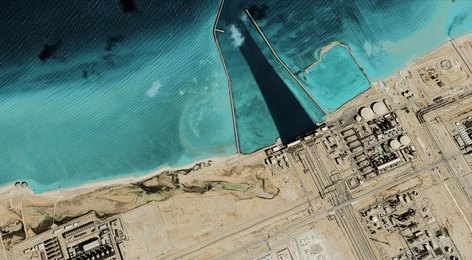
A blast at one of the world’s most important gas hubs has left 72 workers dead or missing and raised fresh questions about who really pays the price when energy and geopolitics collide.
Story Snapshot
- A massive explosion at Qatar’s Ras Laffan gas complex injured 54 people and left 18 missing during restart operations at the Barzan plant.
- Qatar’s government and QatarEnergy blame a technical malfunction, even as the site was still recovering from an earlier Iranian missile strike.[3][5]
- The blast hit a facility that feeds Qatar’s domestic gas needs, showing how fragile critical infrastructure has become in a tense region.[2]
- The pattern of vague official answers and shifting casualty numbers echoes a broader problem: ordinary workers carry the risks while political and corporate elites stay insulated.[1]
What Happened At Qatar’s Ras Laffan Gas Hub
Late Sunday night, an explosion and fire ripped through the Barzan local gas supply facility inside Qatar’s Ras Laffan Industrial City, the heart of the country’s natural gas operations.[1][2] Officials say the blast happened during the start-up of operations at the plant, which supplies gas to Qatar’s domestic market rather than exports.[2][3] The Interior Ministry reported 54 people injured and 18 missing as rescue teams and international search crews combed the site for survivors.[2][11] The fire has been brought under control, but damage to the plant remains unclear.[2]
Witnesses in Doha, roughly 70 kilometers away, heard a loud boom and saw a glow on the horizon, underscoring the force of the blast.[2][11] Qatar’s Interior Ministry called it an “internal explosion” caused by a “technical accident” or “technical malfunction” during operations, and it stressed there were no gas leaks that threatened public safety outside the site.[2][6][7] State energy giant QatarEnergy echoed that line, describing an “operational incident” during startup that triggered the explosion and fire.[3][12][14] Officials have opened an investigation but offered no detailed technical explanation so far.[2][9]
Why This Plant Was Already A High-Risk Site
The Barzan facility was not starting from a normal baseline. In March, during the wider war involving the United States, Israel, and Iran, an Iranian missile struck the Ras Laffan complex, causing what authorities themselves called “extensive” damage and shutting parts of the hub for weeks.[5][13] QatarEnergy’s chief executive has said repairs across the complex could take three to five years, and estimated annual lost revenue around $20 billion.[3] Sunday’s explosion happened as workers tried to restart operations after that earlier attack, making the plant a patchwork of old equipment, emergency fixes, and high political pressure to get gas flowing again.[3][5][6]
For Americans watching from afar, this story may feel familiar even if the location is foreign. After wars, sanctions, or market shocks, leaders talk about “resilience” and “energy security,” but the actual work falls on technicians, welders, and operators on the night shift. In heavy industry worldwide, serious fires and explosions often happen during startups and shutdowns, when systems are in transition and many safeguards are under stress.[16][18] Studies of oil and gas incidents show equipment failures and human error are the most common root causes, not dramatic sabotage plots.[15][16] That makes Qatar’s official “technical malfunction” claim plausible on its face—but it does not erase deeper questions about maintenance, oversight, and the rush to restart.
Official Story Versus Public Suspicion
Qatari authorities have firmly denied any evidence of sabotage, terrorism, or an external attack in this latest blast, describing it as an internal operational accident.[1][10][11] Yet the timing and history make many observers uneasy. This is the same strategic gas hub that was recently hit by an Iranian missile, and where repairs are expected to stretch for years.[5][11][13] Some regional outlets have framed the Ras Laffan complex as a symbol of how Middle East energy infrastructure has become a battlefield between states, markets, and militias.[5][6][9] When a site with that background erupts again during restart, it is not surprising that people on both the left and the right smell more than just bad luck.
At least 54 injured after explosion at Qatari plant
At least 54 people were injured and another 18 remain missing following an explosion at a gas processing plant in the Ras Laffan industrial area northeast of Doha, Qatar’s Interior Ministry said. pic.twitter.com/Ap2G99H5Ok— Vestnik Kavkaza (@kavkaza85236) June 22, 2026
There is, however, a gap between suspicion and proof. So far, no public evidence ties this new explosion to a fresh attack, and even skeptical coverage often admits that investigators still list the cause as technical.[5][8][9] This is the frustrating pattern many Americans know well: officials offer a vague label—“technical incident,” “operational error”—without releasing full incident reports for months, if ever. Elites manage the message while workers and nearby communities live with the scars. That dynamic feeds the sense that a small circle of corporate and government insiders control the narrative, whether the flag above the plant is Qatari, American, or anything else.
Why This Matters For Ordinary Americans
Ras Laffan might sound far away, but shocks there ripple straight into the daily lives of families in the United States and Europe. Qatar is one of the world’s top natural gas producers, and its export plans have been central to calming prices after years of inflation and energy crunches.[5][6] Any sign that its core hub is fragile spooks traders and can push up costs for heating, electricity, and manufacturing. Officials now insist the blast hit a unit serving Qatar’s domestic market, not the main export lines, but markets are still on edge.[1][2] Once again, complex global energy bets can turn into higher bills at home when something goes wrong.
The Ras Laffan story also fits a broader pattern that angers both conservative and liberal voters. On one side, many conservatives see yet another example of how global energy webs, foreign conflicts, and corporate decisions can undermine stable, affordable fuel. On the other, many liberals focus on worker safety, environmental risks, and the feeling that giant firms take shortcuts while communities bear the danger. Both groups can look at 54 injured and 18 missing workers in Qatar and see the same thing: regular people paying in blood for decisions made far above their heads.[11][19]
Lessons About Transparency And Accountability
Industrial accident records in oil and gas show that these events are not rare “black swans” but part of a known risk pattern.[15][17][19] Equipment ages, management pushes for faster restarts, and human beings make mistakes under pressure. In countries with strong independent investigators, such as the United States Chemical Safety Board, deep post-incident reports sometimes reveal ignored warnings, weak oversight, and corporate cost-cutting behind the label “technical malfunction.”[18] Whether Qatar will release that level of detail is unclear. For now, the public gets short statements, changing injury counts, and promises that everything is under control—messages that many Americans have heard too many times at home to take on faith.
For citizens who believe a “deep state” of government and corporate elites runs on half-truths, the Ras Laffan blast is another warning light. A critical plant, already damaged in war, is rushed back toward service, then explodes. Dozens of workers vanish, and the first instinct of authorities is to protect the image of the facility and signal “no threat to public safety.”[2][6][12] Whether the final report blames a valve, a sensor, or a tired operator, the deeper issue remains: without real transparency and accountability, complex systems will keep failing in ways that leave ordinary people—abroad and at home—paying the highest price.
Sources:
[1] Web – Qatar gas plant blast injures 54 people, 18 missing
[2] YouTube – Iran BOMBS Qatar’s Ras Laffan Gas Facility? 50+ Injured …
[3] Web – Fifty-four injured and 18 missing after explosion at Qatar LNG site …
[5] Web – Explosion at Qatar’s Ras Laffan industrial zone leaves several injured
[6] Web – Explosion as Qatar restarts gas export terminal hurts 54 and leaves …
[7] Web – A technical malfunction during operations at a factory in Ras Laffan …
[8] Web – Gulf Times on Instagram: “Ministry of Interior reported an explosion …
[9] Web – A technical malfunction during operations at a factory in Ras Laffan …
[10] Web – Qatar Gas Facility Explosion: Watch: Huge fireball erupts after blast …
[11] YouTube – An Explosion Followed By A Fire Broke Out At The Barzan Gas Plant …
[12] Web – Fifty-four injured and 18 missing after explosion at Qatar LNG site …
[13] Web – A fire at the Barzan local gas supply facility in Ras Laffan …
[14] Web – Injured toll rises to 54 in Qatar gas export terminal explosion, with …
[15] Web – QatarEnergy confirms that there was an operational incident during …
[16] Web – [PDF] Incidents Associated With Oil and Gas operations
[17] Web – The Most Common Plant and Refinery Accidents in Texas
[18] Web – Severe Work-Related Injuries in the Oil and Gas Extraction Industry
[19] YouTube – CSB Safety Video: Anatomy of a Disaster