
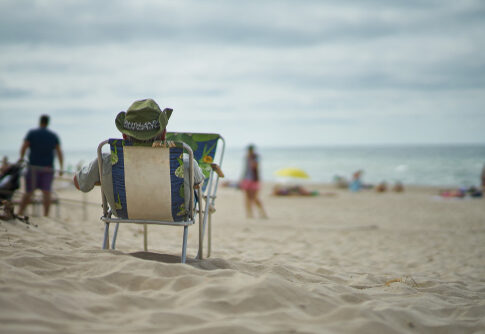
Across the country, health officials are closing beaches for “unsafe” bacteria levels while many Americans wonder if this is smart protection or one more sign the system cannot keep basic public spaces clean and open.
Story Snapshot
- Dozens of beaches in multiple states are closed or under advisories because bacteria levels exceed health standards.
- Officials say swimming could cause stomach illness, rashes, and infections, yet they often cannot fully explain what is polluting the water.
- Testing is slow and infrequent, so beaches can stay closed for days while families and local businesses pay the price.
- Both left and right see a pattern: billions in taxes paid, but government still struggles to keep water safe and give the public clear answers.
Where beaches are closing and why it matters
Health departments in several states, including Massachusetts, New York, New Jersey, Michigan, Illinois, Washington, Iowa, and California, have recently closed beaches or posted swim advisories after tests found elevated levels of harmful bacteria.[3] Officials say these levels exceed state or federal health standards, which are based on “indicator” germs like Escherichia coli or Enterococci that signal possible fecal contamination.[16] Swimming in this water can raise the risk of stomach illness, skin rashes, ear and eye infections, and breathing problems, according to the Environmental Protection Agency and the Centers for Disease Control and Prevention.[3]
Massachusetts has shut or restricted swimming at dozens of beaches for “bacterial exceedance,” while New York’s Suffolk County has warned against bathing at more than sixty beaches after heavy rain and storm runoff.[14] In California’s Coronado area, at least one beach has been closed for weeks because bacteria levels “exceed health standards,” with officials pointing to sewage or chemical spills as likely causes.[9] Michigan and Chicago-area Illinois beaches have also faced closures or advisories due to high bacteria counts, especially around the busy summer holiday season.[7]
What the tests show – and what they do not
Rhode Island’s health department gives a good window into how these decisions are made. The agency says it closes licensed beaches when Enterococci bacteria exceed 60 colony-forming units per 100 milliliters of water, and declares that, during a closure, the water “is not currently safe for swimming or other activities.”[1] Similar thresholds exist around the country, with Woods Hole Oceanographic Institution noting that the Environmental Protection Agency recommends advisories when Enterococci exceed 104 colony-forming units per 100 milliliters, or when Escherichia coli exceeds 235.[16]
These rules are designed as a safety margin, not a guarantee that everyone who swims will get sick. Health officials stress that advisories mean a higher risk, especially for children, older adults, and people with weak immune systems.[17] At the same time, officials admit they often cannot fully trace the pollution source. In Rhode Island, an administrator for the Beach Monitoring Program said stormwater runoff is a major driver, but when rain is low, waterfowl droppings, rotting seaweed, trash, diapers, and pet waste can all push bacteria over the limit.[8] That mix of vague causes and strict rules feeds public doubts about whether closures are always necessary.
Slow testing, long closures, and real-world costs
Another problem is speed. Traditional lab culture tests can take about twenty-four hours to show bacteria levels, meaning beaches may already be closed a full day before results are confirmed.[16] Many states only sample each beach a few times a week, so when a test fails, the rules keep that beach closed until the next sample shows a safe level.[4] In practice, that can mean several days of lost swimming time, even if the water improves faster, simply because the system is slow and cautious rather than real-time.
For families, that delay shows up as ruined weekend plans and wasted gas and parking fees. For small businesses that depend on summer crowds—snack shacks, motels, charter boats—each closure day is money gone for good. National data show “hundreds of beaches” closed each year due to harmful bacteria, viruses, or parasites, highlighting how routine this disruption has become.[16] One recent report found about sixty-one percent of tested United States beaches had at least one day of potentially unsafe contamination in a single summer, suggesting a deeper water-quality problem that occasional closures only expose, not fix.[8]
Deeper worries shared by left, right, and everyone in between
For many Americans, these beach shutdowns land on top of long-running anger about how government works. Conservatives see another example of big agencies that can close public spaces overnight but struggle to tackle root causes like aging sewer systems, poor stormwater control, and lax enforcement on polluters. Liberals see yet more signs that environmental investment, basic infrastructure, and protections for working families are not keeping up with the reality of growing contamination and climate stress. Both sides notice that, year after year, the warnings keep coming.
National and state officials urge people to “check the map” or hotline before swimming, and that is useful advice.[7] But constant cautioning shifts the burden onto ordinary people, who are told to study dashboards and accept last-minute closures while billions in taxes flow through federal, state, and local agencies that still cannot guarantee safe water at popular beaches. According to the National Oceanic and Atmospheric Administration, the number of beach-closure days is now a key indicator of ecosystem health, a quiet scoreboard that shows how far reality is from the promise of clean, open public spaces for all.[20]
Sources:
[1] Web – Health officials issue warnings: elevated bacteria levels trigger …
[3] Web – The Rhode Island Department of Health said it recommended …
[4] YouTube – Beachgoers react as swimming area at Easton’s Beach closed
[7] Web – RI Beach Closure Info – myRVIA.org
[8] Web – Beaches – Rhode Island Department of Health
[9] Web – Beachgoers react to RIDOH recommendations to avoid swimming in …
[14] Web – RIDOH recommends closing swimming areas at three Rhode Island …
[16] Web – High fecal bacteria levels trigger swim advisories, closures at NJ …
[17] Web – Beach Closures – Woods Hole Oceanographic Institution
[20] YouTube – High bacteria levels force beach closures across the U.S.
The mexican president has opened raw sewage flowing in the Pacific. The Humboldt current flows north. Raw sewage all over the beaches from california to alaska. Thank you mexico .