
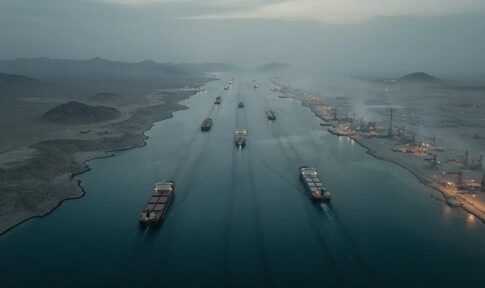
President Trump just ordered the U.S. Navy to shoot and kill without hesitation any boat planting mines in the world’s most critical oil chokepoint, transforming a tense standoff into a potential powder keg that could ignite global markets and military conflict overnight.
When Presidential Tweets Become Military Orders
Trump delivered his lethal force authorization through Truth Social, not the Pentagon briefing room. His exact words carried the weight of a commander-in-chief directive: “I have ordered the United States Navy to shoot and kill any boat planting mines in the Strait of Hormuz. There is to be no hesitation.” The White House immediately amplified the post, confirming this wasn’t social media bluster but official policy. The same message ordered mine sweepers to operate at tripled capacity, clearing explosive devices from shipping lanes that funnel Middle Eastern oil to global markets. This unconventional communication method shocked observers accustomed to traditional military announcement protocols.
The Strait That Holds the World Economy Hostage
The Strait of Hormuz isn’t just another waterway. This narrow passage between Iran and Oman channels one-fifth of globally traded petroleum, making it the world’s most strategically vital maritime chokepoint. When Iran began disrupting traffic, economies worldwide felt immediate tremors. For the first time, Tehran started collecting toll revenues from ships navigating the contested waters, transforming military harassment into profitable extortion. The disruptions triggered oil price volatility and raised insurance premiums for any vessel brave enough to attempt passage. Every tanker that turns back represents billions in economic damage rippling through supply chains from Asia to Europe to American gas pumps.
Two Months of Escalation Reach Boiling Point
The current crisis didn’t materialize overnight. On February 28, 2026, Trump announced major combat operations against Iran, launching coordinated U.S.-Israeli strikes on military installations, government facilities, and critical infrastructure across the Islamic Republic. Iran retaliated by intensifying asymmetric naval warfare, deploying small boats to harass commercial shipping. On April 22, Iranian forces attacked three cargo vessels, successfully capturing two and holding them hostage. The next morning brought dual American responses: Navy forces seized another Iranian-linked oil tanker in the Indian Ocean, the same vessel sanctioned in 2024 for smuggling operations, while Trump issued his shoot-to-kill directive hours later.
Asymmetric Warfare Meets Overwhelming Force
Iran’s tactical approach relies on swarm tactics using small, agile boats that plant mines and threaten larger vessels through sheer numbers and unpredictability. These craft operate from Iran’s extensive coastline along the strait, making detection and prevention challenging despite American naval superiority. Trump’s previous statements referenced 159 Iranian vessels now resting on the ocean floor, a stark reminder that the U.S. Navy can obliterate Iran’s conventional naval forces. Yet asymmetric warfare doesn’t require winning traditional battles. A single mine detonating under a supertanker accomplishes Iran’s strategic goal: demonstrating they can close the strait whenever they choose, regardless of American firepower. Trump’s order attempts to shift this calculus by authorizing preemptive lethal force.
The Pakistan Peace Plan Nobody’s Discussing
While warships maneuver and mines float beneath shipping lanes, Pakistani mediators have quietly presented Tehran with a peace proposal. The details remain undisclosed, but Pakistan’s involvement signals regional concern that U.S.-Iran hostilities could metastasize into broader conflict engulfing Gulf states and beyond. Tehran hasn’t responded to the Pakistani initiative, and Trump’s escalatory order makes diplomatic off-ramps increasingly narrow. Every day without Iranian acknowledgment of mediation efforts suggests hardliners in Tehran view continued confrontation as preferable to negotiated settlement. Pakistan’s neutral broker status gives them unique access, but influence requires both parties wanting de-escalation more than they want the next tactical victory.
Trump Orders Navy to 'Shoot and Kill' Any Boat Planting Mines in the Strait of Hormuz https://t.co/hALyIo3z8e
— Mediaite (@Mediaite) April 23, 2026
Trump’s directive represents a calculated gamble that overwhelming force authorization will deter Iranian mine-laying rather than provoke wider conflict. The order’s “no hesitation” language removes tactical ambiguity for Navy commanders who previously operated under more restrictive engagement rules. Iranian forces now face instant lethal response if caught planting explosives, theoretically raising the cost of their asymmetric strategy beyond acceptable risk thresholds. Whether this deterrence succeeds or instead triggers the very escalation it aims to prevent depends entirely on decisions being made in Tehran right now, decisions the world won’t know about until mines explode or boats burst into flames under American gunfire.
Sources:
Iran live updates: Trump orders Navy to ‘shoot,’ ‘kill’ boats putting mines in strait
Trump says he has ordered US Navy ‘to shoot and kill’ mine-laying boats in Hormuz
US military says it seizes another oil tanker associated with Iran
B.S. That announcement was only that. It even stated that he had [already] ordered it. Orders (if any, as this could be misdirection) would have gone through the White Gouse Staff Admiral. Any accredited news media would know that. This is yellow Joirnalism.
I don’t know any military that instructs their troops SHOOT TO WOUND!!! DO YOU???