
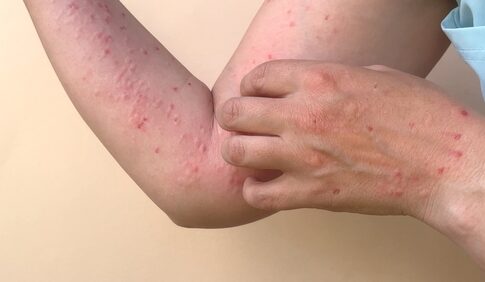
A horse skin infection is being pulled into a human sex-network story, and the evidence is still not settled.
Quick Take
- Doctors in France and Spain reported clusters of dermatophilosis among men who have sex with men.
- The reports point to suspected sexual-network spread, not proven new sexually transmitted infection status.
- The illness is better known as “rain rot” in horses and other livestock.
- Public talk around the clusters has moved faster than the science.
What the reports say
Researchers in Europe have described clusters of dermatophilosis in Barcelona and Lyon among men who had no reported livestock exposure. The disease is caused by Dermatophilus congolensis, a bacterium long linked to animals. In both clusters, several patients had recently visited saunas or other places tied to sexual contact, which made investigators look hard at human transmission inside sexual networks.[4][5][7]
That does not make the condition a confirmed sexually transmitted infection. The Centers for Disease Control and Prevention reports used careful language, describing “suspected sexual transmission” and a “large occurrence” of cases in sexually active men who have sex with men, but they did not claim final proof of the route. The same caution appears in the Barcelona report, which described nine cases of a zoonotic infection.[5][7]
Why the story spread so fast
The label “rain rot disease” sounds dramatic because the illness is usually discussed in animals, not humans. That made the story easy to frame as a new threat. It also tapped into a wider public worry: health agencies often move slowly, while headlines move fast. In this case, the best-supported claim is narrower than the headline. The evidence points to an unusual cluster, not a settled conclusion about a new disease category.[1][2][4]
That gap matters because early outbreak reports can blur the line between a plausible theory and a proven fact. The available reports say the bacteria from some cases were closely related, and several patients had similar exposure histories. Those details support the idea of spread within close-contact networks. They do not, by themselves, prove that sex was the only route, or that the infection is now established as a common sexually transmitted infection.[2][4][5]
What is known about the illness
Dermatophilosis usually causes a rash with pustules or crusted lesions, and most reported human cases in these clusters were mild. The reports say patients either improved on their own or responded to antibiotics. The infection is still considered rare in humans, and the published material supplied here does not show evidence of widespread community transmission beyond the reported clusters in Spain and France.[4][5][7]
The larger lesson is familiar to anyone watching public health closely. When a rare infection appears in a tightly linked social setting, the first questions are often about where it came from, how it moves, and whether officials are missing part of the picture. Here, the data support a real cluster and a real investigation. They do not yet support a clean headline that this is the “latest sexually transmitted infection.”
Sources:
[1] Web – ‘Rain rot disease’: the latest sexually transmitted infection among …
[2] Web – Rare Livestock Skin Disease Found in Gay Men in Europe
[4] Web – Researchers in France and Spain have diagnosed several men who …
[5] Web – Human infections of dermatophilosis have been reported previously …
[7] Web – Suspected sexual transmission of dermatophilosis reported in Spain …